
If you sell on Amazon, you already know the pain.
You wake up. Check your phone.
Boom — “Customer has requested a refund.”
Your heart drops. Your coffee tastes bitter. You immediately assume:
- The product was fine
- The buyer was wrong
- The universe is against you
But here’s the uncomfortable truth:
Refunds are not the enemy. Ignoring them is.
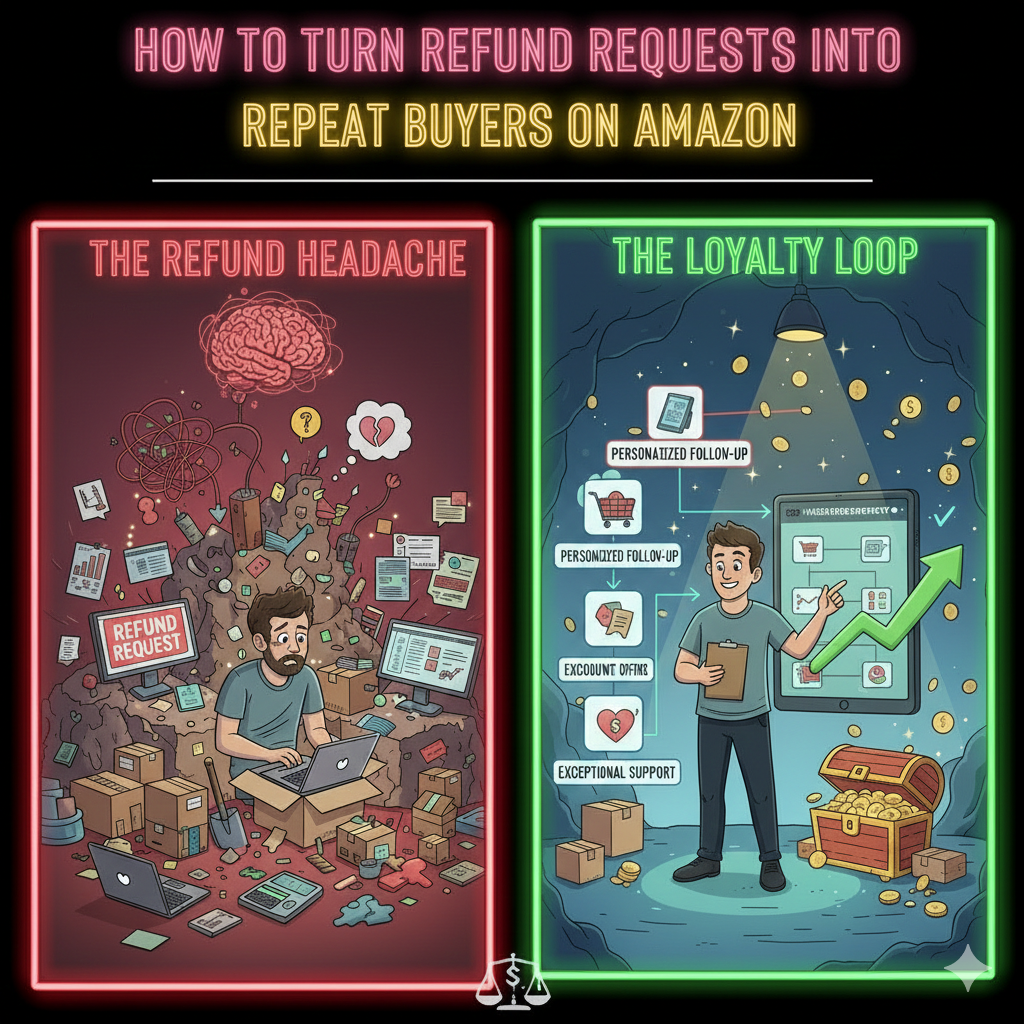
Handled correctly, refund requests can actually turn into repeat buyers — yes, the same people who once clicked “Return Item” can come back and buy again.
Let’s talk about how to pull off that miracle without losing your sanity.
First: Understand Why Amazon Buyers Ask for Refunds
(Spoiler: It’s Not Always Because You’re Bad at Business)
Most refunds happen because of:
- “Not as expected” (aka expectations vs reality)
- Late delivery
- Damaged packaging
- Size or color confusion
- Buyer’s mood that day (very real factor)
Notice something?
Most of these issues are fixable — and not personal.
Amazon buyers are impatient, not evil. If something feels even slightly off, they hit refund faster than you hit snooze in the morning.
Step 1: Don’t Argue. Ever. Amazon Is Watching 👀
The fastest way to lose a customer and upset Amazon?
Arguing.
Even if:
- The product description was perfect
- The buyer clearly didn’t read
- You want to send screenshots with red circles
Don’t.
Instead, respond politely, quickly, and professionally.
Why? Because Amazon rewards sellers who keep customers calm — not sellers who are “technically right.”
A calm refund experience = trust.
And trust is how repeat buyers are born.
Step 2: Speed Is More Important Than Money
Here’s a harsh truth:
Slow refunds hurt more than refunds themselves.
When buyers wait:
- They get annoyed
- They leave bad feedback
- They remember you negatively
When refunds are fast:
- Buyers feel respected
- They calm down
- They’re open to buying again
Even if the refund costs you today, a happy buyer might come back tomorrow — and Amazon notices your fast resolution rate.
Think long-term, not emotional-term.
Step 3: Fix the Root Cause (Not Just the Refund)
Every refund is feedback in disguise.
Ask yourself:
- Is this product image misleading?
- Is the size chart confusing?
- Is the packaging too weak?
- Is the delivery promise unrealistic?
If you get the same refund reason repeatedly, the problem isn’t the buyer — it’s the listing.
Fixing one listing issue can save you hundreds of refunds later.
That’s not damage control.
That’s profit protection.
Step 4: Turn Refund Buyers Into “We’ll Try Again” Customers
Here’s the secret move most sellers skip:
Leave the door open.
You can’t message buyers directly for marketing — but you can:
- Be polite
- Be professional
- Make the experience smooth
- Ensure they leave thinking, “At least the seller handled it well.”
Buyers remember good service more than bad products.
Many repeat customers don’t come back because the product was perfect —
They come back because the seller was decent.
Step 5: Improve Listings to Prevent “Expectation Refunds”
“Not as described” is the most expensive sentence in eCommerce.
Fix it by:
- Adding real images (not over-edited fantasies)
- Showing scale and size clearly
- Writing honest descriptions (don’t oversell)
- Mentioning limitations upfront
When buyers know exactly what they’re getting, refunds drop — and satisfaction rises.
Honesty sells more than hype on Amazon.
Step 6: Packaging Is Silent Marketing
Buyers forgive minor product issues faster than:
- Broken boxes
- Leaking items
- Cheap packaging
Good packaging:
- Reduces damage refunds
- Improves reviews
- Makes your brand feel reliable
You don’t need luxury — you need secure and thoughtful.
A product that arrives safely already wins half the battle.
Step 7: Use Refund Data Like a Business Owner, Not a Victim
Instead of saying:
“Amazon customers are impossible”
Ask:
- Which SKU has the most refunds?
- What reason appears most often?
- Is this product worth continuing?
Sometimes the smartest move is removing a product that causes constant refunds — even if it sells well.
High sales with high refunds = fake success.
The Big Mindset Shift: Refunds Are Part of the Game
Every big Amazon seller has refunds.
Every successful store has complaints.
The difference is how they handle them.
Refunds don’t kill Amazon businesses.
Bad responses do.
When you treat refunds as:
- A trust-building opportunity
- A data source
- A reputation tool
You stop fearing them — and start using them.
Final Thoughts
Amazon is not just a marketplace.
It’s a relationship game — between you, the buyer, and the algorithm.
Handle refunds calmly.
Fix patterns.
Improve listings.
Protect your reputation.
Do this consistently, and you’ll notice something strange:
Some of your best customers…
Were once your refund requests.
And that’s how you turn frustration into long-term sales.

Leave a Reply