
Let’s be honest: most Meesho sellers price their products like they’re afraid to make money. You spend hours uploading listings, editing photos, writing descriptions that sound like poetry—and then slap on a price so low it could make your tailor cry.
You tell yourself, “I’ll keep it cheap to attract more buyers.”
Spoiler alert: that’s not how it works.
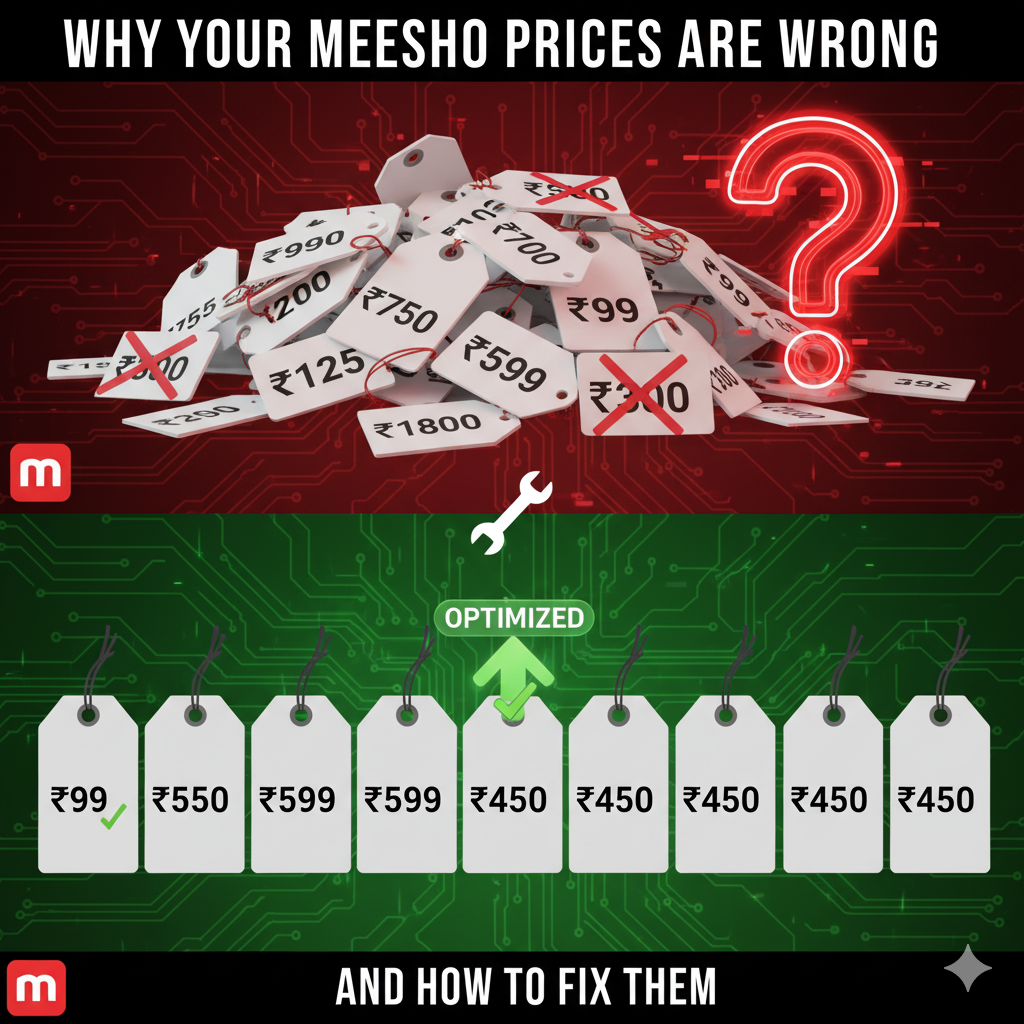
Welcome to the tough love section of your e-commerce career. Let’s break down why your Meesho prices are wrong, and more importantly, how to fix them before your wallet files for bankruptcy.
1. You’re Competing on Price, Not Value
Ah, the classic trap: you see your competitors selling the same item ₹30 cheaper and think, “I’ll just drop my price too.”
Congrats — you just entered a race to the bottom.
Here’s the truth: on Meesho (and literally anywhere online), the lowest price doesn’t always win. Buyers don’t just want cheap; they want trust. If your photos look good, your reviews are solid, and your product description sounds human, you can absolutely charge more.
👉 Pro Tip: Add value instead of cutting price. Offer better packaging, faster shipping, or a thank-you note. Small touches justify higher prices.
2. You Forgot About Hidden Costs
Let’s do some math (don’t worry, it’s the fun kind).
You buy a kurti for ₹250. You sell it on Meesho for ₹300. Sounds like a ₹50 profit, right?
Wrong.
After platform fees, shipping, taxes, and returns — you might be left with ₹10. And if you offer free delivery? You’re basically paying the buyer to take your product.
👉 Fix It:
- List every single cost before pricing — product cost, packaging, courier, GST, Meesho commission, even tape.
- Then add your desired profit on top of that.
You’re running a business, not a discount carnival.
3. You’re Ignoring Psychology
Pricing isn’t just math — it’s mind games. Humans are weird. ₹499 feels cheaper than ₹500. ₹999 feels like a steal next to ₹1,200.
That’s why brands use psychological pricing.
👉 Fix It:
Use prices ending in 9 or 99. It signals “deal” to the brain.
Also, create contrast — list a slightly higher-priced version next to your main product. Suddenly, your actual price looks like a bargain.
It’s not manipulation; it’s marketing.
4. You Don’t Know Your Audience (Yet)
If your buyers are college students, ₹699 might feel like highway robbery. If they’re professionals, they might think ₹299 means low quality.
Different customers have different “pain points” for spending.
👉 Fix It:
Know your niche.
- Selling affordable everyday wear? Stay mid-range but focus on bulk sales.
- Selling luxury ethnic sets? Charge premium and focus on presentation.
Price for the person, not the platform.
5. You’re Scared to Raise Prices
We get it — raising prices feels like walking on thin ice. You imagine buyers running away the second you increase ₹20.
But here’s a fact: if you raise your price and your orders drop only slightly, you’re still making more money overall.
👉 Fix It:
Test price changes gradually. Increase by ₹10–₹30 and monitor sales for a week.
If your revenue holds or grows — boom, that’s your sweet spot.
6. You’re Ignoring Perceived Value
Think about it — when you see a ₹1,499 handbag vs. a ₹399 one, which one do you assume is better?
Exactly.
Low prices can actually make buyers suspicious. “Why is it so cheap? Is it fake? Will it shrink after one wash?”
👉 Fix It:
Improve your perceived value:
- Use clean, professional photos
- Add detailed size guides
- Mention fabric quality, durability, or craftsmanship
- Show customer reviews
Make your product look like it’s worth more — and people will pay more.
7. You’re Not Using Bundle Pricing
Bundles are magic. Buyers love feeling like they’re getting a deal.
👉 Fix It:
Offer combos:
- “Buy 2 Kurtis, Save ₹50”
- “Get a free scrunchie with every order”
- “3 Kitchen Towels for ₹499”
Bundles increase average order value and make your pricing feel generous — even when you’re earning more per sale.
8. You Haven’t Tested Enough
If you set your prices once and never touch them again, you’re doing it wrong.
👉 Fix It:
Experiment.
Run A/B tests:
- Try different prices on similar products.
- Compare sales volume and profit margin.
Over time, you’ll find your perfect pricing formula — the one where customers keep buying and you keep smiling.
9. You’re Forgetting Emotions Sell, Not Numbers
At the end of the day, buyers aren’t doing math; they’re buying feelings. The way your listing makes them feel is what decides the sale.
A product priced at ₹799 but shown beautifully will outsell a ₹499 one that looks dull and lifeless.
👉 Fix It:
Make your pricing fit the vibe — clean layout, confident tone, aesthetic product photos. If it feels premium, buyers won’t flinch at paying more.
10. You’re Playing Short-Term Games
Dropping prices might give you short-term sales, but long-term profit comes from brand trust, repeat buyers, and smart pricing.
👉 Fix It:
Think beyond today’s orders. Build a consistent pricing structure. Make buyers remember you for quality, not “cheapest deal.”
Because in the long run, the seller who charges fairly will always beat the one who sells cheaply.
Final Thoughts
Your pricing is your silent salesperson. It tells buyers who you are — professional or desperate.
Stop apologizing for your prices and start owning your value.
Remember: people don’t buy just because something’s cheap; they buy because it feels worth it.
So go ahead — adjust that price tag. You deserve to make money and sleep at night.

Leave a Reply