
Selling on Amazon feels glamorous until you open your profit sheet and realize you’re working for vibes, not money.
At some point, every Amazon seller hits the same fork in the road:
FBA or FBM?
Amazon FBA looks shiny and effortless.
FBM looks messy but “controlled.”
And somehow… both manage to quietly drain your profits if you choose wrong.
Let’s break it down without the corporate nonsense.
First, Let’s Decode the Alphabet Soup
What Is Amazon FBA?
Fulfilled by Amazon (FBA) means:
- You send inventory to Amazon
- Amazon stores it
- Amazon packs it
- Amazon ships it
- Amazon handles returns
- Amazon also charges you for every single breath your product takes
You basically outsource your soul to Jeff Bezos’ warehouses.
What Is Amazon FBM?
Fulfilled by Merchant (FBM) means:
- You store inventory yourself
- You pack orders
- You ship orders
- You deal with angry customers
- You deal with returns at 11 PM
It’s chaos, but it’s your chaos.
Why Sellers Fall in Love With FBA (Too Fast)
FBA is the “luxury apartment” of Amazon selling.
Why it feels amazing at first:
- Prime badge (buyers trust you instantly)
- Faster delivery
- Higher chances of winning the Buy Box
- Amazon handles customer service
- Less daily headache
You feel like a real seller.
Until the fees show up.
The Silent Profit Killer: FBA Fees
Here’s what Amazon charges you for FBA:
- Fulfillment fees
- Storage fees
- Long-term storage penalties
- Removal fees
- Return processing fees
Sometimes Amazon earns more on your product than you do.
That ₹999 product?
After fees, ads, GST, and returns…
Congratulations, you made ₹72.
When FBA Makes Sense (And When It Doesn’t)
FBA works best if:
- Your product is small and lightweight
- Your margins are high
- Your product sells consistently
- You want scale, not micromanagement
FBA will destroy you if:
- Your product is bulky or heavy
- Margins are thin
- You get frequent returns
- You don’t track fees properly
Many sellers don’t quit Amazon.
They quit FBA without realizing it’s the problem.
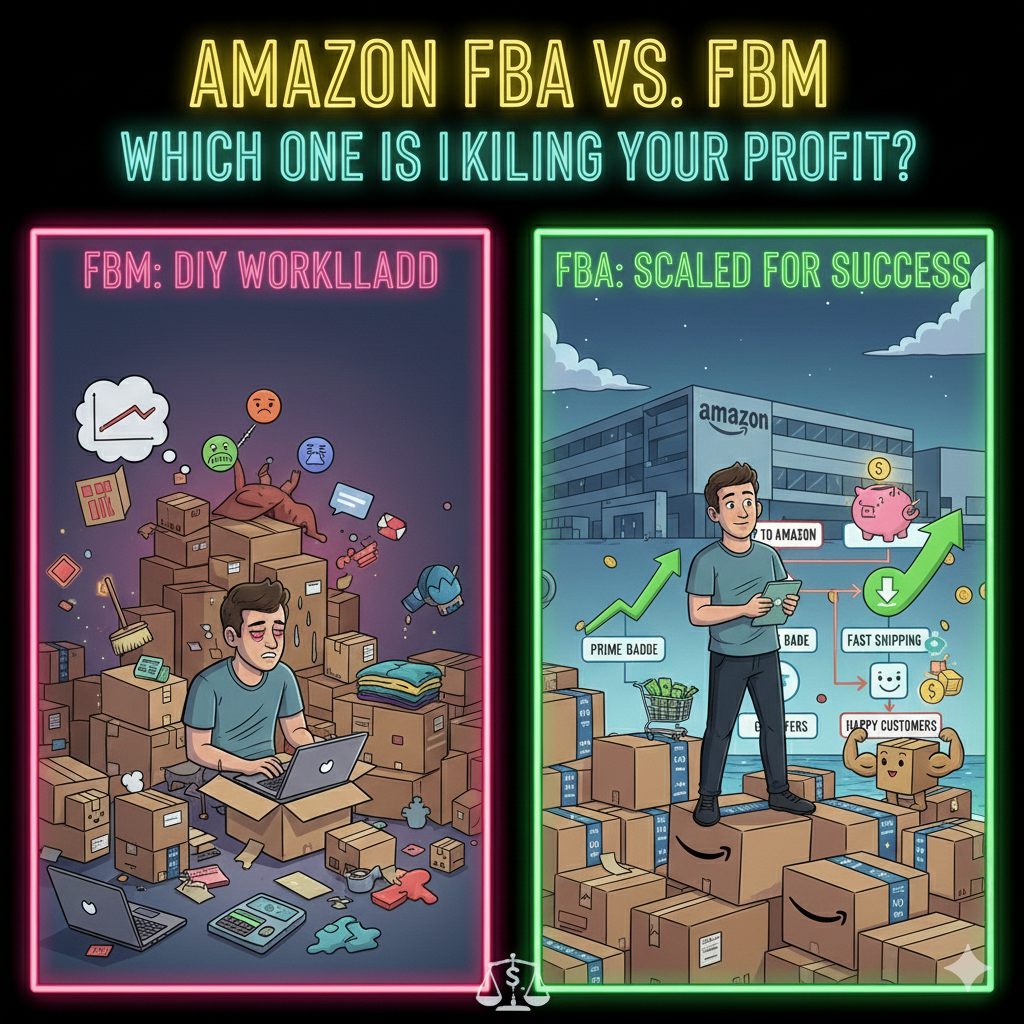
Why FBM Feels Like Struggle Mode
FBM is not glamorous.
There’s no Prime badge.
There’s no Amazon babysitting.
But guess what?
There’s also no silent bleeding of money.
FBM advantages:
- Lower fees
- More control over packaging
- Better profit margins (sometimes shockingly better)
- Easier customization and bundling
You see where your money goes.
The FBM Reality Check (Because It’s Not Perfect)
FBM will test your patience.
The pain points:
- Slower delivery = fewer impulse buyers
- You handle customer complaints
- Courier delays become your personality
- Returns hit emotionally harder
If you’re not organized, FBM turns into a circus.
So… Which One Is Actually Killing Your Profit?
Here’s the uncomfortable truth:
👉 FBA kills profit slowly and silently.
👉 FBM kills time and sanity, but saves money.
Most sellers lose money not because Amazon is bad —
but because they choose fulfillment based on convenience, not math.
The Smart Seller Move: Hybrid Strategy
Top sellers don’t pick sides.
They mix both.
Smart combo approach:
- Use FBA for fast-moving, small, Prime-friendly products
- Use FBM for bulky, customized, or high-return items
- Track profits per SKU, not emotions
- Switch fulfillment when margins change
Amazon isn’t loyal.
You shouldn’t be either.
The Question You Should Actually Ask Yourself
Not:
“Which is better — FBA or FBM?”
But:
“Which one lets me keep more money after everything?”
Because sales screenshots don’t pay rent.
Profit does.
Final Verdict (No Sugarcoating)
- If you want scale and convenience, FBA is powerful — but dangerous
- If you want control and margin, FBM is painful — but honest
- If you want to survive long-term?
Use both and let data decide
Amazon doesn’t care how hard you work.
It only cares how efficiently you play the game.
Choose wisely — your profit depends on it.

Leave a Reply