
So you woke up, opened your Amazon Seller dashboard, and saw it:
“Your account has been suspended.”
You blink twice. Refresh. Check your Wi-Fi. Maybe it’s a glitch?
Nope. It’s real. You’ve officially joined the secret society of suspended sellers — welcome to the club no one wants to be in.
Amazon doesn’t discriminate. It can suspend a rookie selling socks and a pro who’s shipped 10,000 phone cases a week. The algorithm sees all, forgives none.
But don’t panic (yet). Before you start rage-chugging caffeine or writing emotional emails to Jeff Bezos, let’s talk about how to survive this drama like a professional.
Step 1: Breathe, Don’t Beg
The first reaction to a suspension is panic. The second is sending an email that starts with, “Dear Amazon, I am a humble seller, please unsuspend my account.”
Don’t. Do. It.
Amazon doesn’t respond to emotions; it responds to structure, facts, and clear plans. This isn’t a breakup — it’s a business problem. Keep it calm, keep it clean, and for heaven’s sake, don’t guilt-trip an algorithm.
Step 2: Find Out Why You Got Suspended
Amazon never says, “Hey buddy, you messed up because of this one thing.” Instead, they throw a mysterious line like “Your account is under review for policy violations.”
Cool. Which policy? Out of the 300?
Here are the usual suspects:
- Late shipments or fake tracking IDs
- Product authenticity issues (yes, even if your supplier swore it’s original)
- Too many customer complaints
- Listing restricted products
- Duplicate accounts (you sneaky multitasker)
Go through your performance notifications, emails, and Seller Central alerts like a detective with trust issues. The reason is there — it’s just buried under corporate poetry.
Step 3: Gather Evidence Like a True Crime Podcaster
Now that you know the “why,” it’s time to collect proof that you’re innocent (or at least trying to be).
Pull out invoices, supplier certificates, order reports, and screenshots of customer chats.
Amazon loves paperwork more than your local RTO office. The more organized your documents, the faster your appeal will move.
Pro tip: put everything in one PDF and label it clearly. Don’t send 47 random attachments named “doc_final_final(2).pdf.”
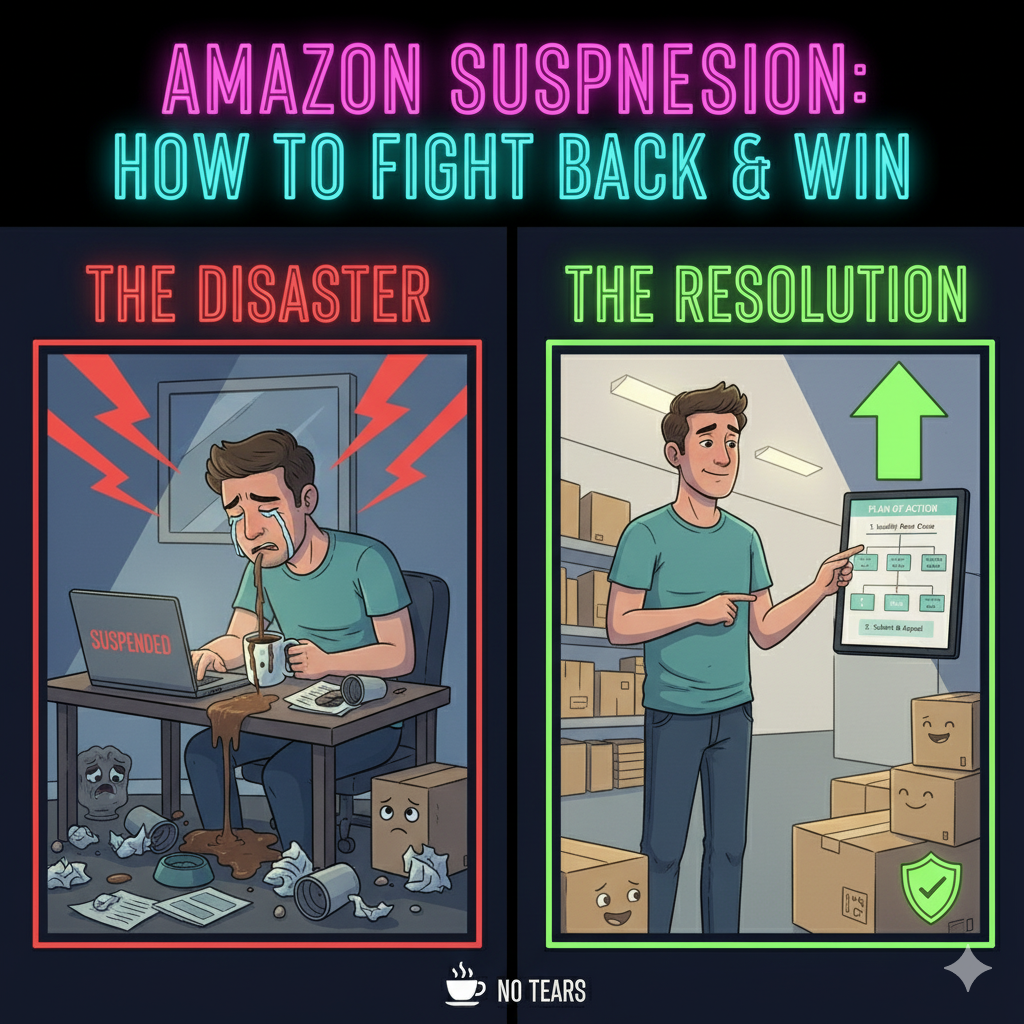
Step 4: Write a Plan of Action (That Doesn’t Sound Like a Sob Story)
This is where most sellers fail. A Plan of Action (POA) isn’t an essay — it’s a confession letter written by a genius.
Your POA should cover three things:
- What happened (briefly and factually)
- What you did to fix it (specific actions, not vague promises)
- How you’ll prevent it in the future (process improvements)
Example:
“The issue occurred due to incorrect product categorization. We’ve retrained staff, implemented double verification for listings, and now use Amazon’s category guidelines before uploads.”
Short. Clear. Zero drama.
Amazon reviewers go through hundreds of appeals a day — yours should make their job easier, not harder.
Step 5: Submit and Then… Wait
This part hurts. You’ve sent your appeal, refreshed your inbox 17 times, and you’re now analyzing every email like it’s a breakup text.
Here’s the deal: Amazon takes anywhere from 24 hours to 14 days to respond. Sometimes longer. You can’t speed it up by sending follow-up emails every hour. (They’ll just get ignored faster.)
Take a breath. Work on other platforms. Hydrate. Go outside. Touch some grass.
Step 6: Don’t Repeat the Mistake (Seriously)
Once reinstated, most sellers do the same thing — celebrate, list 20 new products, and forget why they got suspended in the first place.
Then boom. Suspended again.
Keep monitoring your account health, seller metrics, and customer messages. Respond fast, keep your return rate low, and only list products you can 100% deliver.
Remember: Amazon is like a strict parent — it forgives once, but never twice.
Step 7: Build a “Just in Case” Backup
If Amazon is your only source of income, you’re walking on a tightrope.
Diversify — start selling on Flipkart, Meesho, GlowRoad, or your own Shopify site.
One platform should not have the power to ruin your day and your breakfast.
Step 8: The Mental Health Section
Yes, this deserves its own heading. Seller suspensions are brutal.
You’ve built something for months, and overnight it feels like it’s gone.
But remember: every top seller has faced at least one suspension. They came back smarter, stronger, and slightly more cynical.
So, take the day off, complain to your dog, eat something fried, and get back to work. You’ll fix it.
In Conclusion: You’re Down, Not Done
Amazon suspensions feel personal — but they’re not. They’re just the platform’s way of saying, “We care about quality, and you tripped a wire.”
So stop crying into your coffee. Start writing your comeback story. Because nothing feels better than seeing “Your account has been reinstated” — especially after surviving the world’s most stressful timeout.
And hey, when you’re back in business? Maybe frame that suspension email as a reminder. You earned your stripes, Seller Warrior.

Leave a Reply