
There are two kinds of pain in a Flipkart seller’s life:
- When your courier partner “misplaces” a parcel worth ₹799, and
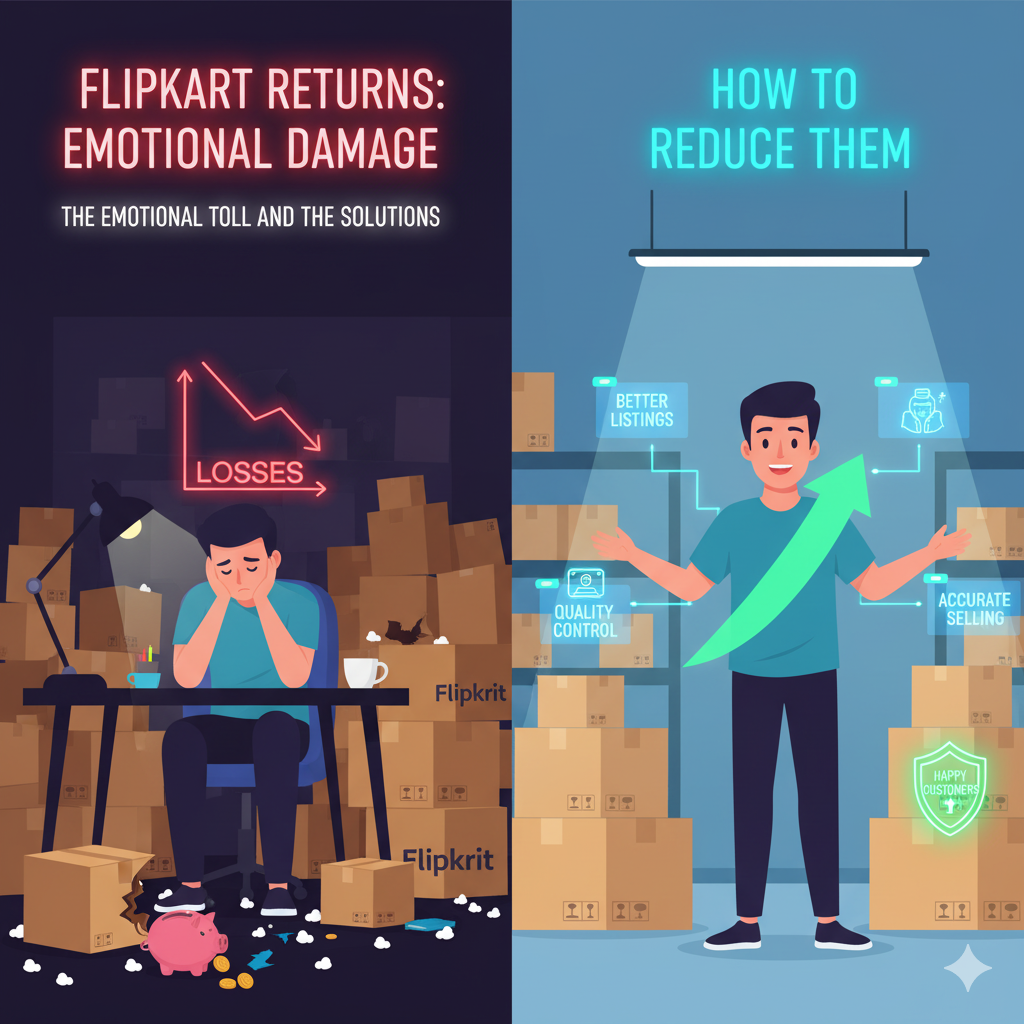
- When that dreaded notification pops up — “Return initiated by buyer.”
You could be having a perfectly normal day, sipping chai, maybe even planning new listings… and then BOOM — “Return Requested.” Instant heartbreak.
It’s not just business. It’s personal.
Because behind that product is your sweat, packaging tape, bubble wrap, and fragile mental health.
Welcome, my friend, to the emotional damage of Flipkart returns.
Let’s laugh through the pain — and then fix it.
1. The Five Stages of Flipkart Return Grief
If you’ve been selling online for even a month, you’ve been through this:
Stage 1 — Denial:
“Maybe it’s a mistake. Maybe Flipkart’s app glitched.”
Stage 2 — Anger:
“How dare they return it after using it for 3 days?!”
Stage 3 — Bargaining:
“Maybe if I write to Seller Support nicely this time…”
Stage 4 — Depression:
Checks Flipkart dashboard, sighs deeply, eats Parle-G biscuits.
Stage 5 — Acceptance:
“Returns are part of eCommerce. I’ll just… cry later.”
2. Why Flipkart Returns Happen (a.k.a. The Excuses of the Century)
Let’s face it: most returns don’t happen because your product is bad.
They happen because people are… people.
Here are the classics:
- “Didn’t like it.” (Translation: ordered impulsively while half asleep.)
- “Color not same.” (Translation: I forgot my screen has brightness at 20%.)
- “Size issue.” (Translation: didn’t read the size chart, obviously.)
- “Received late.” (Translation: it was perfectly on time, but I changed my mind.)
- “Different product received.” (Translation: I used it, now I’m returning it.)
Sound familiar? Yeah, same.
But here’s the good news — there are ways to reduce these returns without losing your sanity.
3. Clear, Honest Descriptions Save Lives (and Your Wallet)
If your listing says “cotton,” but it feels like polyester’s cousin, you’re inviting a return.
Be brutally honest in your descriptions.
Use clear bullet points. Include details like:
- Fabric material (don’t say “premium” — say “poly-cotton blend”)
- Actual measurements
- What’s included and what’s not
The more clarity, the fewer “expectation vs reality” disasters.
4. Photos That Tell the Truth — Not Fairy Tales
Good photos sell.
But accurate photos prevent returns.
If your product photo looks like a Bollywood movie poster, but the real thing looks like a local stage play — guess what’s coming back to you?
Use natural lighting, show close-ups, show real usage.
One honest photo is worth ten filters.
5. Size Charts Are Not Optional (Stop Ignoring Them)
You’d think this is obvious, but sellers skip it all the time.
Buyers are terrible at guessing sizes — help them out!
If you sell fashion, always include a clear, visual size chart.
If you sell home products, include measurements in inches and cm.
Your goal: leave no room for “I thought it was bigger/smaller.”
6. Communicate Before It’s Too Late
When a buyer messages you, respond fast.
A friendly, professional tone can sometimes stop a return before it starts.
If they say “The product looks different,” send a polite message like:
“Hi! I’m so sorry to hear that. Could you please share what looks different? I’ll help you with a quick fix!”
Most people just want to be heard. And when they feel respected, they’re less likely to return your item out of spite.
7. Quality Control: The Boring Hero of Low Returns
Before shipping, inspect every single piece like it’s going to your boss.
Loose stitching? Smudged print? Slight defect? Don’t ship it.
A small 5-minute quality check saves you a 5-day headache later.
8. Delivery Speed = Buyer Happiness
Long delivery times increase returns. Why? Because the longer they wait, the higher their expectations.
If possible, choose faster courier partners or ship from nearby warehouses.
A quick delivery makes the product feel fresh — not like a regret waiting to happen.
9. Handle Returns Gracefully (Yes, Even When You’re Fuming)
When a return happens, resist the urge to rant on Twitter.
Instead:
- Accept it calmly
- Review why it happened
- Improve the next listing
Every return teaches you something — either about the buyer or about your own process.
10. Track, Analyze, Improve, Repeat
Keep a simple record: what got returned, why, and how often.
You’ll start noticing patterns:
- Same product type?
- Same courier issue?
- Same misleading photo?
Then fix those one by one.
Reducing returns isn’t about luck — it’s about learning.
In Conclusion
Every Flipkart seller goes through it.
You cry, you curse, you eat snacks dramatically — and then you improve.
Because behind every “return initiated” is a hidden business lesson.
So take a deep breath, package your next order with love (and maybe some bubble wrap for your heart), and remember —
Every return makes you a smarter seller.
And someday, when you see “0 Returns This Week,” you’ll smile and think,
“Emotional damage healed. For now.”

Leave a Reply